Last Updated: April 16, 2026 · Medically Reviewed by Dr. Marcus Chen, MD
Metabolism does not slow abruptly at a birthday, but it does change gradually across adulthood — and the cumulative effect becomes visible in the 40s and 50s. The widely-cited idea that basal metabolic rate plunges in middle age has been partially revised by a 2021 study in Science (Pontzer et al.), which found basal metabolic rate per kilogram of lean tissue is surprisingly stable from age 20 until about age 60. The real change is elsewhere: in body composition, insulin sensitivity, hormonal milieu, and physical activity patterns.
What looks like "slow metabolism" in the 40s is usually a combination of muscle loss, fat gain, rising insulin resistance, hormonal shifts, reduced spontaneous movement, and accumulated metabolic drift from years of eating and activity patterns that no longer match what the body needs. Each of these is modifiable. The good news: the body remains remarkably responsive to appropriate intervention well into the 60s and beyond.
Starting around age 30, adults lose approximately 3–8% of muscle mass per decade without intentional resistance training. By 50, that is 10–15% less muscle than you had at 30. Muscle is where most dietary glucose is disposed of after meals — more muscle means better blood sugar control, and less muscle means more glucose lingers in circulation after eating. This is a primary mechanism behind age-related insulin resistance.
Muscle also consumes energy at rest. Losing 10% of your muscle over a decade lowers your daily calorie needs in a way that the scale eventually reflects — even if your eating patterns have not changed. The compounding effect over years explains the slow-creeping weight gain many people notice without any apparent cause.
The fix is straightforward in principle, challenging in practice: resistance training two to three times per week, with enough intensity to stimulate muscle adaptation. Bodyweight, resistance bands, dumbbells, machines — the modality matters less than the consistency and progressive difficulty. This single intervention has outsized effects on both insulin sensitivity and metabolic rate.
Insulin resistance is far more common in midlife than diagnosed diabetes statistics suggest. Many people with fasting glucose in the 95–110 mg/dL range have significant insulin resistance already, with elevated fasting insulin compensating to keep glucose looking normal. This state — sometimes called "normoglycemic insulin resistance" — is where the trajectory toward prediabetes and type 2 diabetes begins, often years before a diagnosis.
If you want an accurate picture of where you stand, ask your physician to add a fasting insulin to your next bloodwork. The HOMA-IR calculation (fasting glucose × fasting insulin ÷ 405) gives a reasonable insulin resistance score. Values above 2.0 suggest meaningful insulin resistance; above 3.0 suggests it is significant. This is far more informative than fasting glucose alone in midlife.
In women, perimenopause begins a decade or more before menopause itself — often starting in the late 30s to early 40s. Declining and erratic estrogen disrupts body composition (favoring visceral fat accumulation), reduces insulin sensitivity, and can worsen sleep quality. Hot flashes and night sweats fragment sleep further, which compounds metabolic effects. Postmenopausal women face a distinctly different metabolic environment than premenopausal women.
In men, testosterone declines gradually from roughly age 30 onward — about 1% per year on average. Lower testosterone is associated with reduced muscle mass, increased visceral fat, and reduced insulin sensitivity. Men with significantly low testosterone often benefit from evaluation with an endocrinologist, as treatment when appropriate can meaningfully improve metabolic markers.
Cortisol patterns also shift with age and chronic stress exposure. Elevated evening cortisol disrupts sleep, increases visceral fat, and impairs insulin signaling. Stress management is not a soft recommendation in midlife — it is a direct metabolic intervention.
Sleep quality often deteriorates after 40, and the metabolic cost is steep. Sleep disruption reduces insulin sensitivity measurably the next day, disrupts hunger hormones, and drives cravings for carbohydrate-dense foods. Obstructive sleep apnea becomes more common with age and excess weight, and it is one of the most strongly associated conditions with insulin resistance.
Prioritizing sleep in midlife — consistent schedule, cool dark room, no screens in the hour before bed, alcohol only in moderation — produces outsized metabolic returns. If you snore heavily, wake unrefreshed despite adequate time in bed, or have daytime sleepiness, an evaluation for sleep apnea is worth pursuing.
1. Resistance training, twice weekly minimum. Nothing else moves metabolism in midlife like preserving and building muscle.
2. Protein intake of 1.2–1.6 g per kg body weight daily. Higher than the RDA, and specifically shown to support muscle preservation and metabolic health in older adults.
3. Daily movement beyond formal exercise. Walking, taking stairs, standing instead of sitting. These low-intensity activities add up to meaningful metabolic effects.
4. Sleep prioritization. Seven to nine hours of quality sleep, consistent schedule, with medical evaluation if quality is poor.
5. Dietary pattern emphasizing protein, vegetables, legumes, fish, and olive oil. The Mediterranean-style pattern has the strongest evidence base for metabolic health across age groups.
6. Targeted supplementation where evidence supports it. Berberine (for insulin sensitivity and blood sugar), omega-3s (cardiovascular and inflammation), vitamin D (if deficient), and magnesium (for insulin sensitivity and sleep) have the strongest midlife evidence bases.
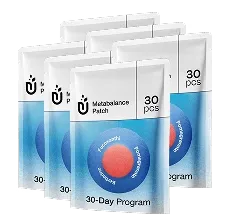
Purisaki Berberine Patches are designed to plug into a midlife metabolic health routine as a consistent, easy-to-use source of berberine and complementary compounds. Berberine's effect on insulin sensitivity is particularly relevant after 40, when insulin resistance becomes a meaningful driver of weight gain and energy issues. The transdermal patch eliminates the oral-berberine GI problem that drives many midlife adults off the compound.
The patch is not a replacement for muscle, sleep, or a reasonable diet — it is a multiplier on them. People who combine the lifestyle foundation with consistent Purisaki use over months typically see the combined effect be greater than either alone.
Purisaki Berberine Patches deliver berberine and eight complementary botanicals transdermally — no pills, no digestive side effects, 8 hours of steady metabolic support per patch.
See Purisaki Pricing & Packages